Environment Protection Programs
EPP
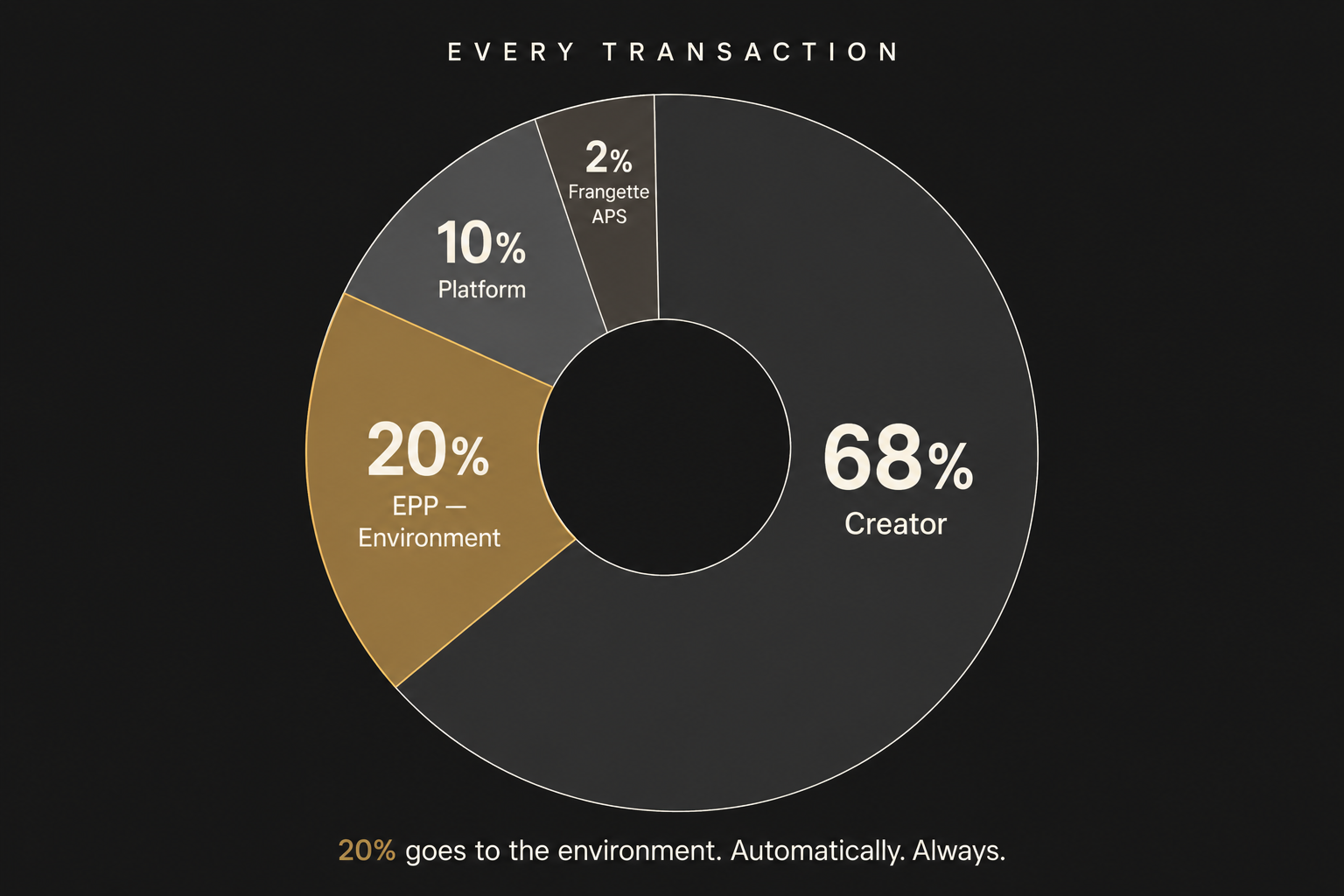
20% of every transaction on Florence EGI goes to the environment. This is not marketing. Not a promise. It is structural.
When someone buys a certified work on the platform, twenty per cent of that transaction's value is automatically directed to environmental protection projects. Not at the end of the year, not at anyone's discretion: at the very moment of payment.
I decided this would be the way Florence EGI exists in the world. Not as an add-on, not as a campaign — as part of the structure.
RAISON D'ÊTRE
Why I wanted this structure
RAISON D'ÊTRE
Why I wanted this structure
Frangette was born to do something concrete to restore the ecosystem of planet Earth. Not to declare it. To do it.
I wanted to bring together two of humankind's most powerful driving forces: art and business. I have always been strongly motivated by these two areas of my life, and I thought — why not bring them together in a single effort to drive forward the urgent need to do something for the ecosystem?
We are not talking about climate change here. When we see Nobel laureates say one thing and other Nobel laureates say the exact opposite, figuring out where the truth lies is really complicated.
But the fact that we are destroying our forests, devastating our oceans and annihilating the pollinator population is plain to see. It is a common experience to feel deep outrage in front of scenes such as the plastic islands or a forest violated in its depths.
So I decided to use technology to find innovative solutions, and to generate money to be used in projects that take concrete action to remedy these scourges.
This is the nature of the Environment Protection Programs.
How every transaction is divided
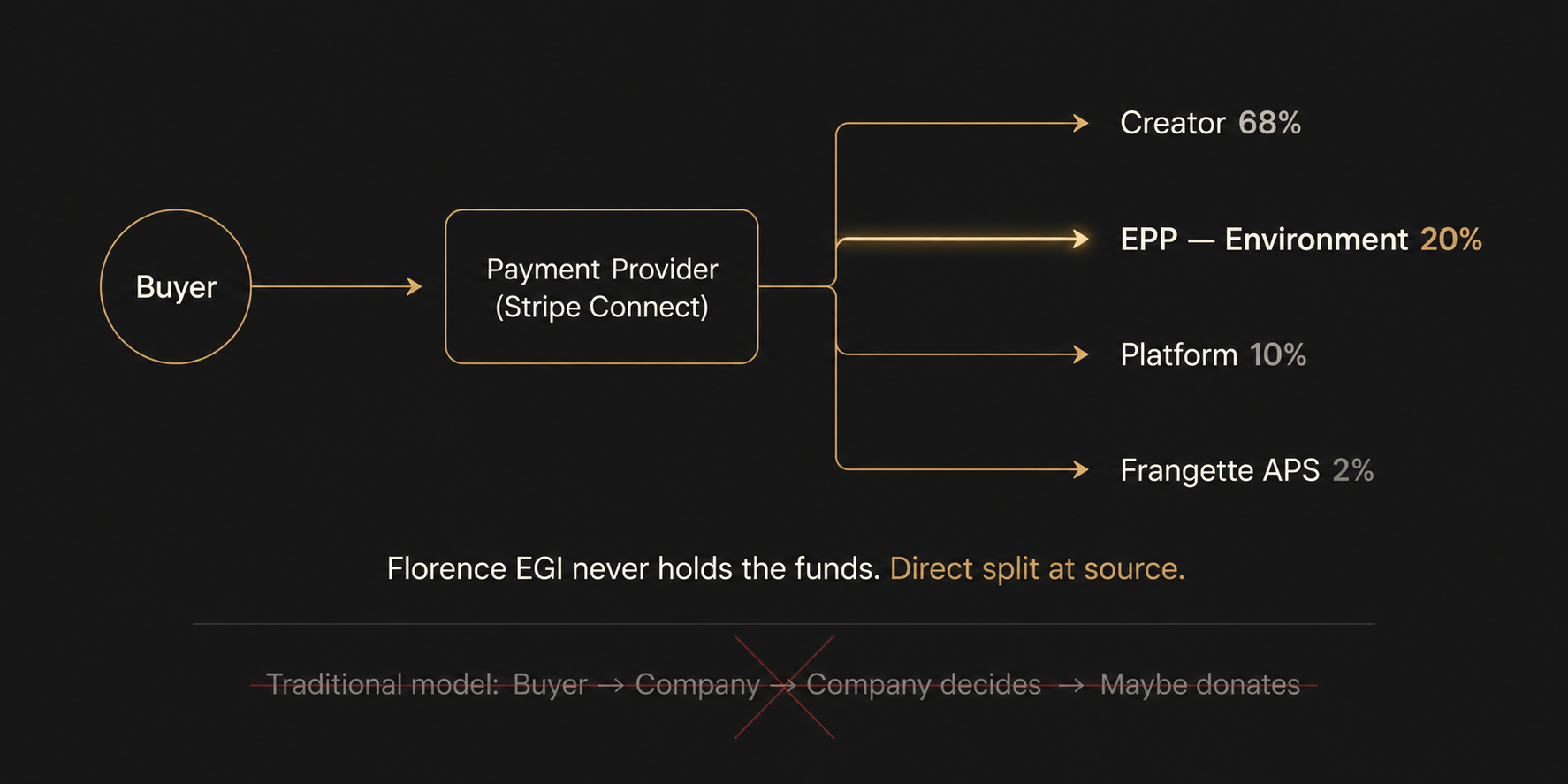
The money never passes through us
The buyer's payment is split directly by the payment processor — Stripe Connect — among the final recipients. Florence EGI never holds the funds, neither the creator's nor those destined for the environment.
This is not a bank transfer we make at the end of the month. It is a split that happens the instant the payment is processed.
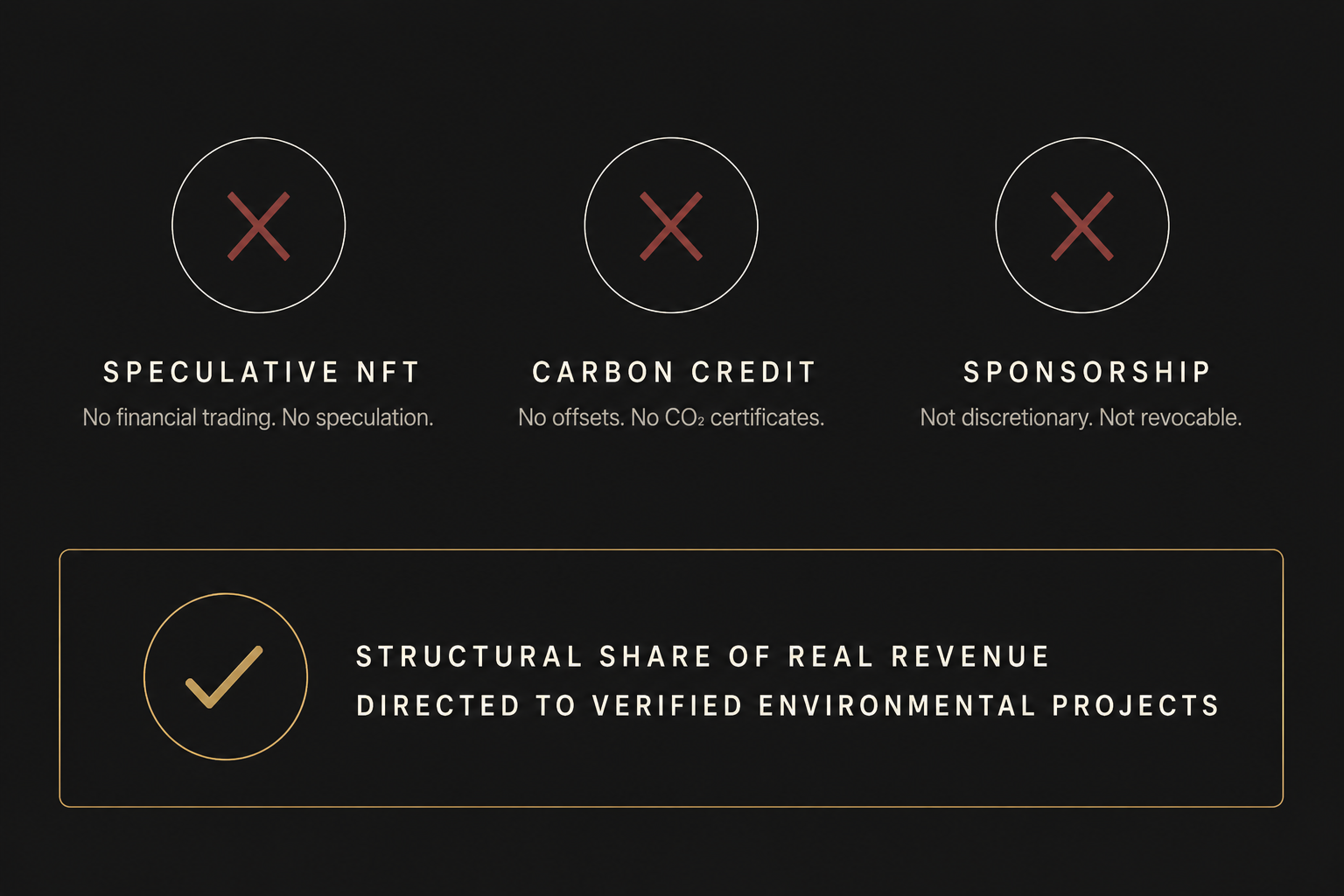
What it is not
Three common confusions, cleared up once and for all.
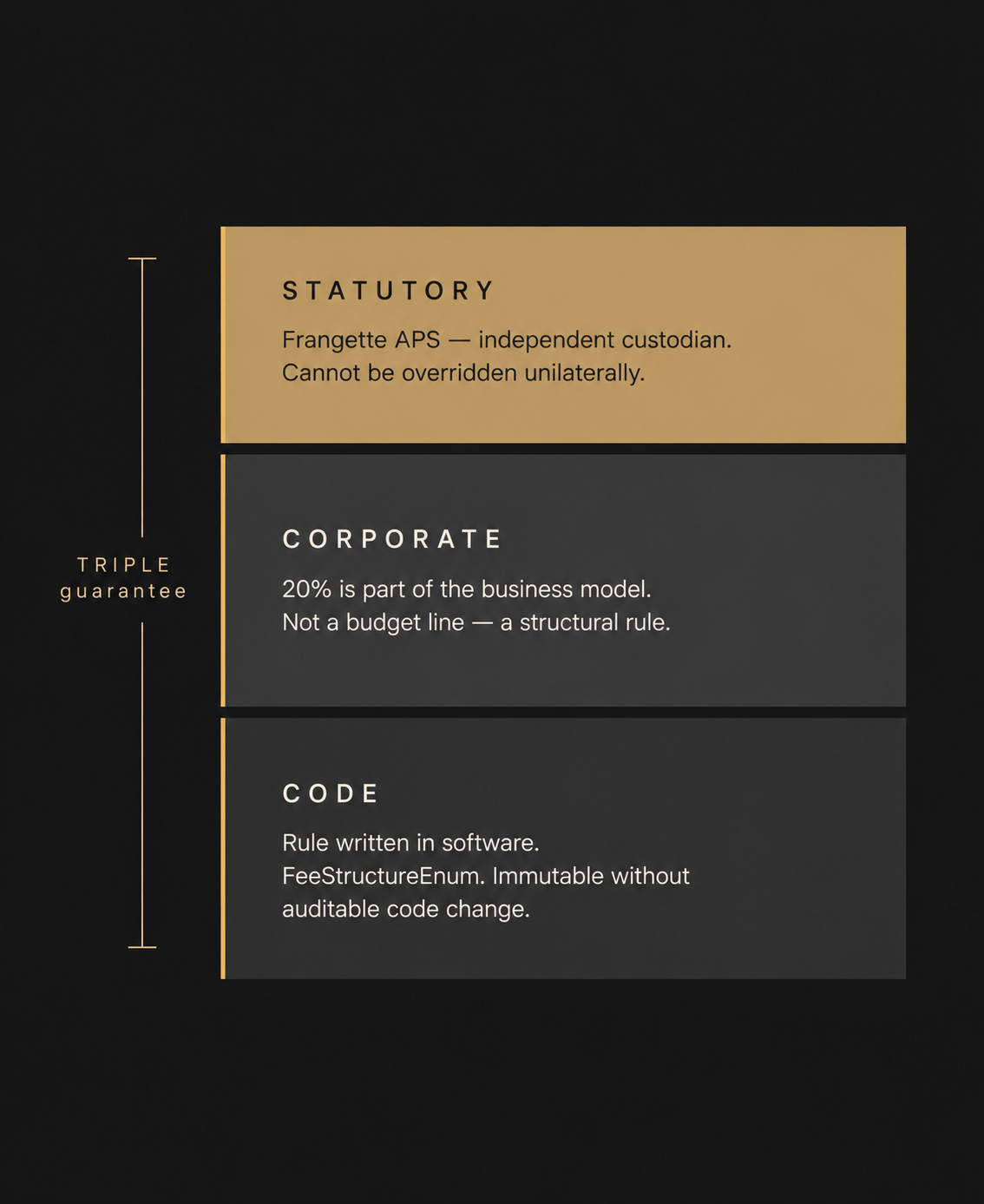
Who guarantees it
Three independent levels prevent the mechanism from being altered.
The virtuous cycle
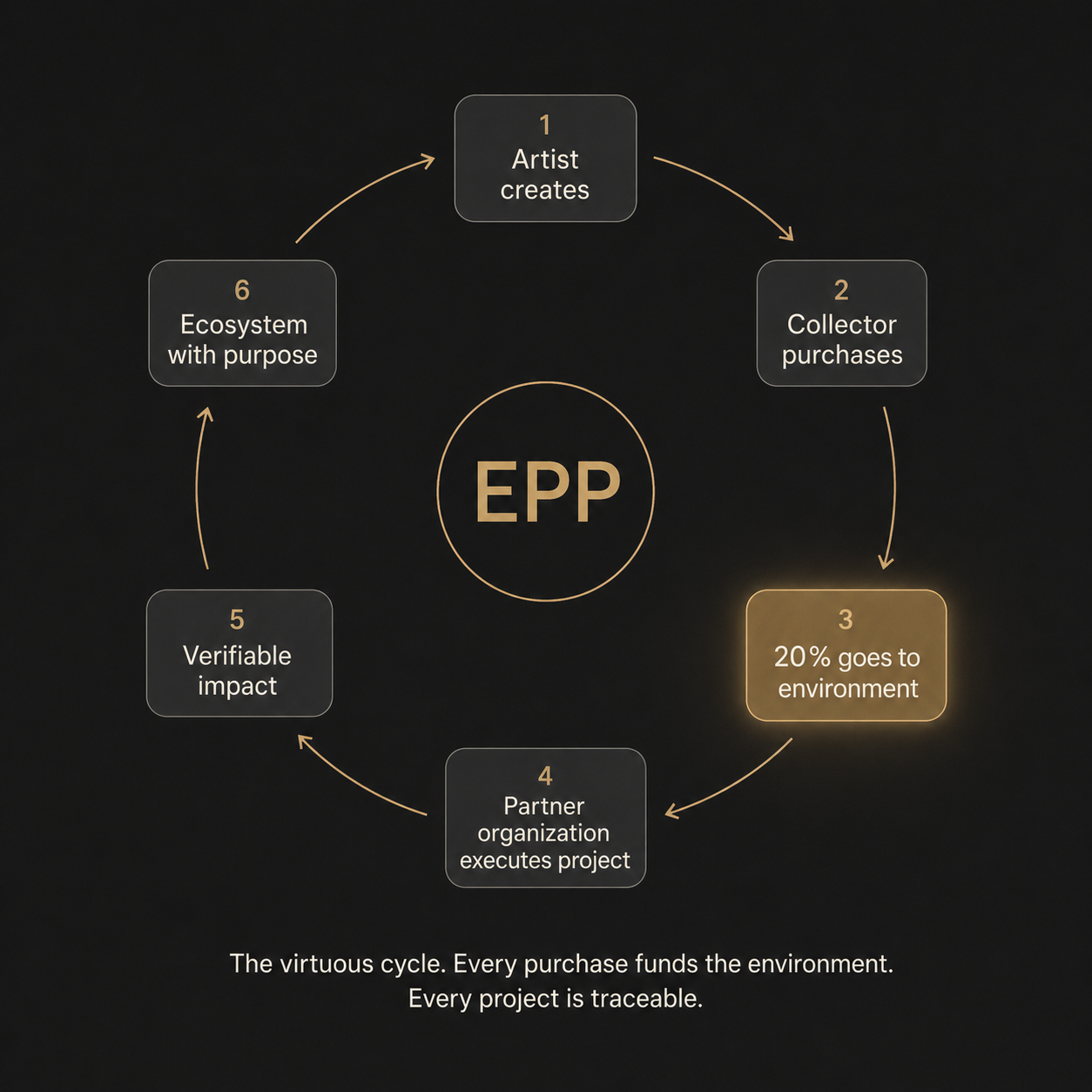
Every purchase funds the environment. Every project is traceable.
THE THREE PROGRAMS
When a creator opens their collection, they choose which of the three programs will receive the 20% EPP share. The choice is permanent for each EGI and propagates to subsequent resales.
WATER
APR
Aquatic Plastic Removal
WATER
APR
Aquatic Plastic Removal
What APR does
The APR program deals with the removal of plastic from water bodies. The creator who chooses APR for their collection automatically allocates the 20% EPP share (on primary sales) to projects for aquatic plastic removal, water cleaning, pre-sea interception, and coastal remediation.
Why it matters
The Earth's oceans are facing a silent but devastating crisis. Every year millions of tonnes of plastic end up in seas and oceans, forming floating islands and infiltrating marine ecosystems at every level. It is not only a threat to marine fauna and flora: it has direct repercussions on human health and on the entire life cycle of the planet.
The floating continent
The "plastic islands" are huge masses of plastic waste concentrated at various points in the oceans, created by marine currents. The best known — the Great Pacific Garbage Patch — is a carpet of plastic debris whose surface is comparable to that of some countries. These islands are only the visible part: most of the plastic decomposes into smaller particles, invisible to the naked eye but no less dangerous.
Micro- and nanoplastics
Microplastics (fragments under 5 millimetres) and nanoplastics (even smaller) spread easily in the oceans, are ingested by marine fauna and, through the food chain, can reach us. The effects on human health are still being studied, but research suggests possible inflammation and toxicity at the cellular level.
Impacts
Plastic pollution has direct repercussions on marine ecosystems: animals from plankton to large mammals ingest this waste, with fatal consequences. It disturbs the balance of ecosystems and impacts the economy of coastal communities that depend on fishing and tourism.
Status: program active in the creator's choice. Selection of partners in the field is in progress.
LAND
ARF
Appropriate Restoration Forestry
LAND
ARF
Appropriate Restoration Forestry
What ARF does
The ARF program deals with appropriate reforestation: right species for the territory, protection of young plantations, related biodiversity. The creator who chooses ARF allocates the 20% EPP share to projects for reforestation and the re-creation of forests and woodlands, respecting biodiversity and the natural habitat.
The program is not limited to Italy. Forests are lost everywhere, and ARF follows the projects where they are needed most.
Why it matters
Deforestation is eroding the planet's green lung at an alarming rate. Every passing second we lose vital forest areas equivalent to the size of a football field.
Where we lose primary forests
In 2022, in the Amazon, the state of Amazonas in Brazil almost doubled its primary forest loss rate over three years. Most of the losses on the Brazilian side are due to large-scale clearing, probably for cattle pasture, along existing highways.
The Democratic Republic of the Congo continued to lose primary forest, over half a million hectares in 2022. There the main cause is small-scale agriculture and charcoal production.
Ghana recorded in the same year the highest percentage increase in primary forest loss — 18,000 hectares, many of them in protected areas.
Bolivia saw a record level of primary forest loss in 2022, with a 32% increase over 2021. There the main factor is commercial agriculture.
Status: program active in the creator's choice. Selection of partners in the field is in progress.
BIODIVERSITY
BPE
Bee Population Enhancement
BIODIVERSITY
BPE
Bee Population Enhancement
What BPE does
The BPE program deals with the protection and enhancement of the bee population: healthy colonies, restoration of flower meadows, research on native species. The creator who chooses BPE allocates the 20% EPP share to projects supporting pollinator populations.
The official name of the program is "Bee Population Enhancement" — enhancement of the population. Not protection, not education: enhancement.
Why it matters
Bees are among the most important pollinators on the planet, today under unprecedented threat. The rapid decline of their populations signals a profound environmental problem, with potentially disastrous impacts on biodiversity, agriculture and ecosystem balance.
How much we depend on them
About 70% of agricultural crops, providing 90% of the world's food, depend in some way on bees for pollination. Without these tireless workers, many foods we take for granted could become rare and expensive.
The causes of decline
The decline in bee populations is attributable to various factors: loss of habitat, excessive use of pesticides, climate change, diseases. Intensive agriculture, with its reliance on chemicals and the reduction of flowering areas, has drastically reduced food sources and nesting sites. Diseases such as colony collapse disorder (CCD) have further decimated populations.
Impacts
The decline of bees is not only an environmental issue, but also an economic one. Pollination is a vital ecosystem service that sustains agricultural production. Without it, many crops would not be able to produce fruit or seeds in sufficient quantities — reducing food availability and raising prices, hitting consumers and farmers alike.
Status: program active in the creator's choice. Selection of partners in the field is in progress.
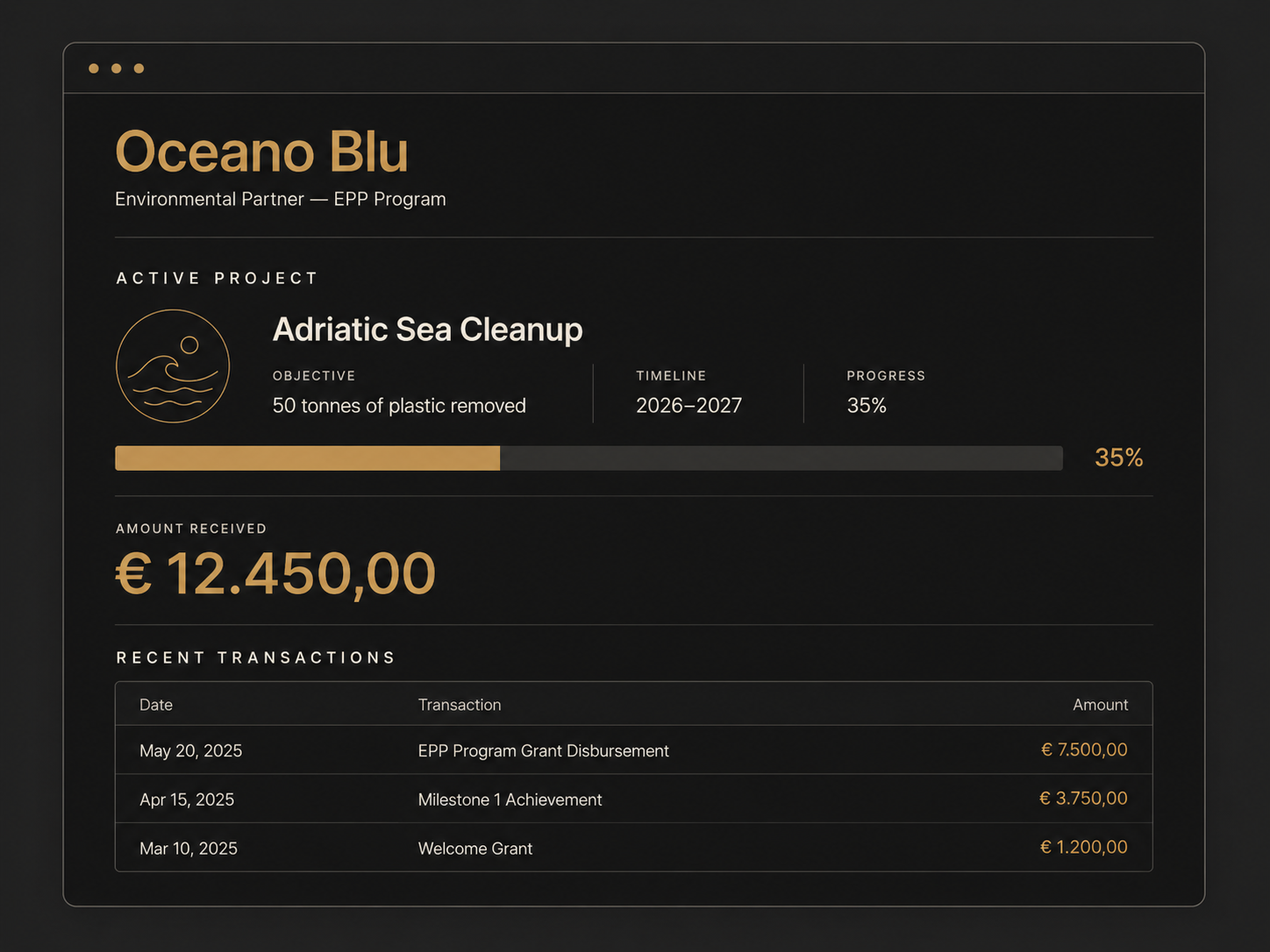
What a partner organisation looks like
Every partner organisation has a public profile on the platform: identity, active project, progress, amounts received. Visible to everyone, no registration required.
TAXATION
The EPP share allocated to environmental programs is an act of liberality: a donation, not a payment for services. The tax treatment depends on who you are. Florence EGI is not a withholding agent — it provides tracking and documentation tools, but compliance remains with you.
TAXATION
If you are an individual donor
How the deduction works
TAXATION
If you are an individual donor
How the deduction works
This section refers to Italian tax law.
You are the donor
When you purchase an EGI on the Florence EGI platform, 20% of the value of the transaction (on primary sales in the CONTRIBUTOR profile) is automatically allocated to the EPP program chosen by the creator. The split happens directly from the payment processor to the dedicated EPP wallet: Florence EGI never touches these funds.
In Italian tax terms, the share allocated to an EPP is an act of liberality — a donation — not a payment for a service.
What it means in practice
- The EPP share is not subject to VAT (donations are not VAT operations).
- Upon the donor's request, the receiving EPP entity issues a donation receipt.
- The receipt is valid for tax deduction/deduction purposes pursuant to Art. 15 TUIR and to the regulations applicable to the receiving entity.
How to obtain the receipt
For users with a high volume of purchases, the FlorenceEGI dashboard allows you to request from the EPP entity a cumulative receipt — monthly or annual — downloadable directly, valid for tax deductions.
What Florence EGI does NOT do
Florence EGI is not a withholding agent. It does not directly manage the tax documentation between you and the EPP entity. It provides the tools to track donations and request the receipt from the receiving entity, but the final responsibility for your tax declaration remains yours.
For specific cases (large amounts, flat-rate regime, occasional services above threshold), it is recommended to consult your tax advisor.
TAXATION
If you are a company or large entity
Integration and compliance
TAXATION
If you are a company or large entity
Integration and compliance
This section refers to Italian tax law.
If you purchase EGI as a company
When the buyer of an EGI is a legal person (S.p.A., S.r.l., structured association, foundation, NGO, public body), the 20% EPP share allocated to the environmental program remains an act of liberality, but the accounting and tax treatment follows the rules of your organisation.
VAT treatment
The EPP share is not subject to VAT. It is a donation, not a payment. Platform fees and any other components of the transaction instead follow the applicable VAT regime (Art. 22% ordinary unless exempt — see FlorenceEGI tax documentation for the cases of exemption of works of art pursuant to Art. 10 DPR 633/72).
Accounting registration
The donation must be recorded in the accounting books according to your internal policy and the applicable accounting principles (OIC for Italian companies, IAS/IFRS for international groups). Deductibility depends on the legal nature of the receiving entity and on your own tax regime.
Documentation available
Florence EGI makes available to companies:
- Export of transaction data in CSV or XML format
- API webhooks for real-time notifications of donations
- Customised quarterly or annual reports
- Complete on-chain audit trail of the allocated EPP shares
These tools facilitate integration with ERP systems (e.g. SAP, Oracle) or company CRMs, but do not replace the organisation's internal compliance procedure.
What Florence EGI does NOT do
Florence EGI never acts as a withholding agent. It does not issue tax documentation in place of the recipient EPP entity, which remains responsible for issuing any receipts requested. Tax compliance always remains with the purchasing organisation and the receiving EPP entity.
For complex cases (large amounts, multinational groups, donations that trigger specific CSR regulations or non-financial reporting), consult your tax advisor and internal compliance office.
TAXATION — EPP SIDE
Are you an EPP receiving donations?
Compliance, automation, responsibility
EPPs — Environmental Protection Projects — whether small non-profits or large companies and structured entities, receive funds directly from FlorenceEGI users through dedicated wallets linked to the collections. The platform offers advanced tools for reporting, automation and documentation support, but does not manage or hold the funds destined for the EPPs. Fiscal and administrative responsibility remains with the receiving entity, according to its legal nature.
TAXATION
Small non-profit entity (ETS / ONLUS)
Registered in the RUNTS or former ONLUS list, manages donations as acts of liberality pursuant to the Third Sector Code (D.Lgs. 117/2017).
TAXATION
Small non-profit entity (ETS / ONLUS)
Registered in the RUNTS or former ONLUS list, manages donations as acts of liberality pursuant to the Third Sector Code (D.Lgs. 117/2017).
How it works with FlorenceEGI
- Donations arrive directly on your account/wallet, without intermediation.
- Donation receipts are issued only upon the donor's request (Italian regulation, not our choice).
- Recommended mode: cumulative annual or monthly receipt for each donor, even in the case of thousands of micro-donations.
- No electronic invoice: donations are acts of liberality, not payments.
- The platform automatically generates pre-compiled receipts, digitally archived, downloadable by the donor from their dashboard.
- All receipts are tracked for any tax audits (complete audit trail).
Real example
The Frangette Association, which supports FlorenceEGI, operates this way: it receives donations directly on its own account, upon request issues cumulative receipts through the FlorenceEGI automatic system, all tracked according to ETS regulation.
Regulatory sources
D.Lgs. 117/2017 (Third Sector Code), Agenzia delle Entrate Circulars on ETS/ONLUS, RUNTS Regulation.
TAXATION
Large entity, company, structured group
Organised entity with its own legal personality (SpA, Srl, foundation, NGO, multi-utility, corporate) which has internal accounting and administrative structures.
TAXATION
Large entity, company, structured group
Organised entity with its own legal personality (SpA, Srl, foundation, NGO, multi-utility, corporate) which has internal accounting and administrative structures.
How it works with FlorenceEGI
- Funds are transferred directly to an IBAN held by the entity or to a validated corporate wallet.
- The production of receipts, donation attestations, credit notes takes place through your administrative office, according to your internal policies and the applicable accounting principles (OIC, IAS/IFRS).
- FlorenceEGI offers API, downloadable reports, exportable audit trails to integrate data directly into your CRM, ERP systems, or your administrative flows.
- Complete traceability of the flow in the platform, interoperability with your systems, reduction of manual workloads.
The principle
The platform guarantees only traceability in the platform and data export. It does not replace your internal compliance procedures. You always remain responsible for the correct fiscal and administrative management of the funds received, according to your legal nature and your accounting regime.
Typical example
A company receives 100,000€ for a project → downloads the transaction report → integrates the data with its own accounting/fiscal system → internally produces the documents required according to its own policies.
Regulatory sources
Italian Civil Code, national and international accounting principles (OIC, IAS/IFRS), D.Lgs. 231/2007 (anti-money laundering), art. 83 D.Lgs. 117/2017.
FlorenceEGI never acts as a withholding agent and is not a party to the financial flows destined for the EPPs. Each EPP manages its own compliance: we provide only tools, traceability and transparency. All guidelines are made public in ToS, partner onboarding and technical documentation.
From here on
EPP is not a future project. It is active today. The mechanism is in production, the platform is operational, the infrastructure is ready to receive partner organisations.
If you are an environmental organisation and want to understand how it works, let's talk. If you want to see the platform in action, enter here, opens in new tab.